
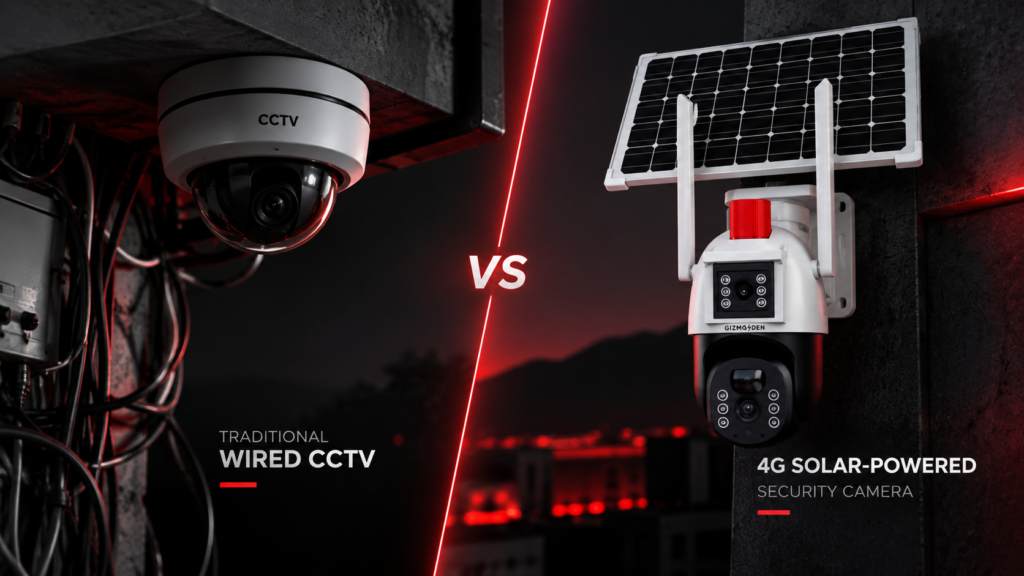
Choosing the right security system can make or break your property protection. Here is a head-to-head comparison of modern 4G solar solutions and conventional wired setups.
Security needs are evolving rapidly across Bharat. Whether you are securing a remote agricultural farm in Karnataka, a new construction site, or your residential perimeter, reliable surveillance is non-negotiable. But when it comes to choosing between traditional wired CCTV and modern solar-powered alternatives, which option fits your exact requirements?
1. Power Supply & Installation Complexity
Traditional CCTV: Requires a continuous mains electricity connection and long runs of messy coaxial or ethernet cables. If power fails or wires are cut, your feed goes dark.
Solar CCTV (Gizmoden Systems): Fully autonomous with built-in solar panels and high-capacity lithium battery backups. Zero electrical wiring needed, making installation possible anywhere under the sun.
Did you know?
Solar security cameras eliminate the expensive hassle of trenching wires across large open yards or remote property boundaries.
2. Connectivity: WiFi vs. 4G SIM
Traditional CCTV: Usually tethered to a local broadband router via Wi-Fi or cables. If your internet router drops or loses power, remote mobile viewing stops instantly.
Solar 4G Cameras: Utilize cellular SIM cards to transmit live HD feeds directly to your smartphone app, ensuring independent connectivity even in deeply remote, off-grid locations.
Summary Verdict: Which Should You Choose?
Go with Traditional CCTV if you are setting up an indoor office building with pre-existing structured cabling and stable local power lines.
Go with a Gizmoden Solar 4G Camera if you need robust perimeter defense for open plots, farmhouses, villas, or sites lacking reliable electricity or Wi-Fi infrastructure.